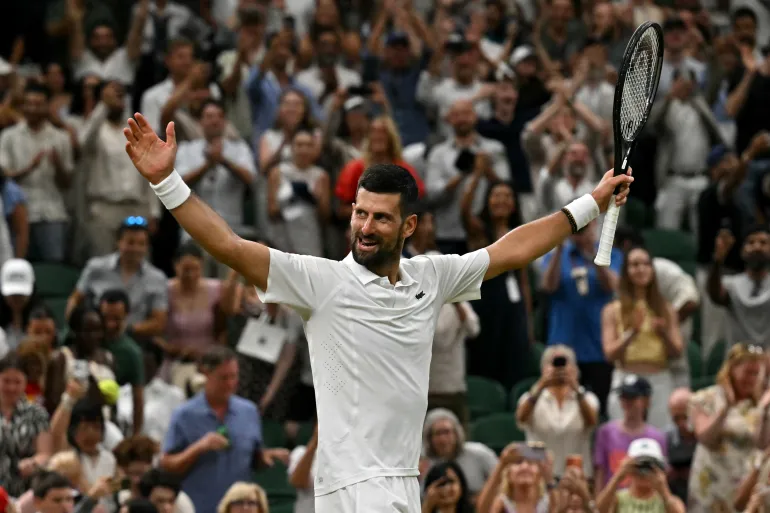
Novak Djokovic is still grinding at 39 years old, chasing history with a singular focus: a 25th Grand Slam title that would put him one ahead of Margaret Court on the all-time list. Yet some of the sport's most celebrated voices believe that number deserves serious context, and that the true measure of greatness across eras is far more complicated than a simple tally.
Martina Navratilova and Chris Evert are the central figures in this debate. Both dominated women's tennis during the 1970s and 80s, yet both routinely skipped the Australian Open during their peaks, favouring more lucrative events in America and Europe. Navratilova, an 18-time Grand Slam champion, has been candid about this trade-off. She pointed out that if she and Evert had competed in Australia every year, their Slam counts would look dramatically different today. Navratilova missed 12 editions of the Australian Open across her career, a staggering figure made more striking by the fact that she won seven consecutive singles titles at Melbourne Park from 1982 onward. She was also absent from the French Open on 12 occasions.
The same historical gap applies, in reverse, to Court. Her 11 Australian Open titles were accumulated in a period when many top players simply were not making the trip Down Under. That context matters when Djokovic, or anyone else, is measured against her record.
For Djokovic specifically, analysts suggest his own Slam total could theoretically exceed 30 if today's competitive landscape and mandatory participation culture had existed in earlier decades. The sport has changed enormously, and raw numbers increasingly struggle to reflect those shifts.
TennisDraw users have flagged Djokovic as one of the most debated bracket picks heading into every major, and this historical debate only adds to the intrigue.